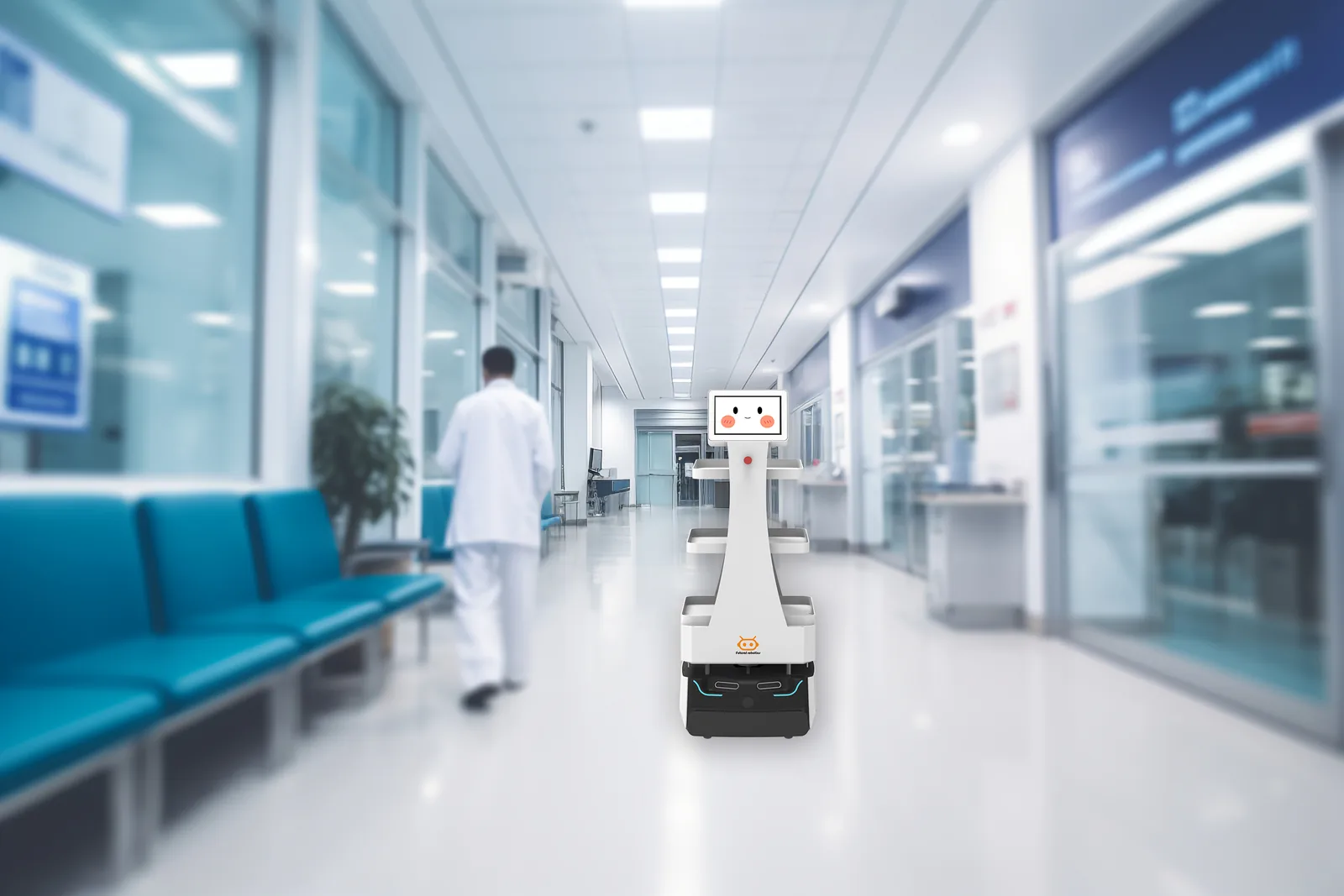
Nursing home robots typically automate repetitive transport, provide staff-supported resident engagement, assist selected environmental hygiene routines or enable a custom care workflow. They should support—not replace—professional caregivers.
Four common types
1. Delivery robots
These move meals, linens, consumables and other approved items along mapped indoor routes. Selected platforms can integrate with elevators and automatic doors.
2. Engagement and companion robots
These provide information, activities, reminders, wayfinding or telepresence. They should be positioned as staff-supported engagement tools, not substitutes for relationships or clinical judgement.
3. Disinfection robots
These support defined UV-C or air-disinfection workflows. Their operation requires suitable safety controls, staff procedures and evidence matched to the selected configuration.
4. Custom assistive and rehabilitation-support robots
These are designed around a specific workflow. Clinical or wellbeing claims require professional input, validation and an appropriate regulatory assessment.
What should a buyer evaluate?
- The exact task and measurable baseline
- Resident safety, privacy and accessibility
- Hallway width, thresholds, elevators and doors
- Payload, hand-off and cleaning requirements
- Support, spare parts and staff training
- Evidence behind certification and performance claims